पासवर्ड सुरक्षा में सेंध और सतर्कता
1Password ने एक सिक्योरिटी ब्रीच (सुरक्षा उल्लंघन) की जानकारी दी है, जिसमें हैकर्स ने बैकएंड सिस्टम तक पहुँच बनाई। इससे ग्राहकों के नाम, ईमेल पते और अकाउंट मेटाडेटा लीक हो गए। हालांकि कंपनी ने यह भी बताया कि स्टोर किए गए पासवर्ड, सीक्रेट कीज (Secret Keys) और एन्क्रिप्टेड वॉल्ट (encrypted vaults) पूरी तरह सुरक्षित हैं, और अकाउंट पर किसी के कब्ज़ा करने का कोई सबूत नहीं मिला है।
पासवर्ड मैनेजमेंट प्लेटफॉर्म 1Password ने एक सुरक्षा घटना का खुलासा किया है, जिसमें एक हमलावर ने इसके कुछ बैकएंड सिस्टम तक पहुँच बनाई और ग्राहकों के अकाउंट की जानकारी डाउनलोड कर ली।
कंपनी के अनुसार, इस घटना से कुछ यूज़र्स प्रभावित हुए हैं, जिनके नाम, ईमेल पते और कुछ ऐसे अकाउंट मेटाडेटा लीक हुए हैं जो संवेदनशील (sensitive) नहीं हैं।
1Password ने यह भी स्पष्ट किया है कि ग्राहकों के वॉल्ट, स्टोर किए गए पासवर्ड, सीक्रेट की और अन्य एन्क्रिप्टेड जानकारी तक कोई पहुँच नहीं बनी है और वे सुरक्षित हैं।
25 नवंबर को जारी एक सुरक्षा अपडेट में, कंपनी ने बताया कि 19 नवंबर को कुछ संदिग्ध गतिविधियों का पता चलने के बाद उन्होंने जाँच शुरू की। उन्हें संकेत मिले थे कि एक हमलावर ने कंपनी के एक कर्मचारी के कॉर्पोरेट GitHub अकाउंट तक पहुँच बना ली है।
आरोप है कि हमलावर ने इस अकाउंट का इस्तेमाल करके 1Password के सोर्स कोड रिपॉजिटरी तक पहुँच बनाई और बैकएंड सेवाओं में मैलिशियस कोड (हानिकारक कोड) डाल दिया।
इसके बाद, इन सेवाओं के ज़रिए कुछ ग्राहकों के अकाउंट से जुड़ी प्रशासनिक जानकारी डाउनलोड हो गई।
1Password ब्रीच में कौन सी जानकारी लीक हुई?
कंपनी के अनुसार, हमलावर ने कुछ यूज़र्स के अकाउंट रिकॉर्ड की कॉपी बना ली।
इस जानकारी में ग्राहकों के नाम, ईमेल पते, अकाउंट और यूज़र आइडेंटिफायर, अकाउंट बनाने की तारीख और आखिरी बार साइन-इन करने का समय शामिल था।
लीक हुई जानकारी में पब्लिक की (public keys), सिक्योर रिमोट पासवर्ड (SRP) प्रोटोकॉल पैरामीटर, और ईमेल के ज़रिए भेजे गए लिंक में मौजूद कुछ टोकन भी शामिल थे। इन लिंक का इस्तेमाल आमंत्रण भेजने, अकाउंट बनाने (provisioning) और अकाउंट रिकवरी के लिए किया जाता है।
1Password ने स्पष्ट किया कि पब्लिक की (public keys) डिज़ाइन के हिसाब से ही सार्वजनिक होती हैं, और लीक हुए SRP पैरामीटर का इस्तेमाल ग्राहकों के अकाउंट तक पहुँचने के लिए नहीं किया जा सकता।
हमलावर ने प्राइवेट रिपॉजिटरी से सोर्स कोड भी कॉपी कर लिया और कंपनी के 'कंटीन्यूअस इंटीग्रेशन और कंटीन्यूअस डिलीवरी' (CI/CD) सिस्टम तक पहुँच बना ली, जिसमें इंफ्रास्ट्रक्चर से जुड़े क्रेडेंशियल (credentials) होते हैं।
कंपनी ने बताया कि उन्होंने उन क्रेडेंशियल्स को बदल (rotate) दिया है जो लीक हो सकते थे। साथ ही, उन्हें ग्राहकों के अकाउंट पर कब्ज़ा होने या लीक हुए प्रोविज़निंग टोकन के गलत इस्तेमाल का कोई सबूत नहीं मिला है।
क्या पासवर्ड और स्टोर किए गए वॉल्ट सुरक्षित हैं?
1Password ने बताया कि इस घटना के दौरान उसके ग्राहकों के वॉल्ट (vault) में मौजूद डेटा, सेव की गई चीजें और उन्हें सुरक्षित रखने वाली एन्क्रिप्शन कुंजियाँ (encryption keys) पूरी तरह सुरक्षित रहीं।
कंपनी ने स्पष्ट किया कि उसके पास ग्राहकों के अकाउंट पासवर्ड या 'सीक्रेट कीज़' (Secret Keys) तक पहुँच नहीं होती है, जिनका इस्तेमाल उनके एन्क्रिप्टेड वॉल्ट को सुरक्षित रखने के लिए किया जाता है। इसलिए, अगर कोई हमलावर कंपनी के बैकएंड सिस्टम तक पहुँच भी जाता है, तो भी उसे ग्राहकों के वॉल्ट में मौजूद जानकारी नहीं मिल सकती।
कंपनी ने यह भी बताया कि उनके अकाउंट रिकवरी कीज़, एप्लिकेशन और ब्राउज़र एक्सटेंशन पर इस घटना का कोई असर नहीं पड़ा है।
इस सुरक्षा घटना के बाद 1Password ने क्या कदम उठाए हैं?
घटना का पता चलने के बाद, 1Password ने बताया कि उन्होंने प्रभावित GitHub अकाउंट को डिसेबल कर दिया, समझौता के (compromised) एक्सेस टोकन को रद्द कर दिया और हमलावर द्वारा बनाए गए एक्सेस को हटा दिया।
इस प्लेटफ़ॉर्म ने यह भी बताया कि उन्होंने संभावित रूप से उजागर हुए इंटरनल क्रेडेंशियल्स को बदल दिया या रद्द कर दिया है, अपने GitHub और CI/CD सिस्टम में सुरक्षा नियंत्रणों को मजबूत किया है, और खतरों का पता लगाने के लिए अतिरिक्त उपाय लागू किए हैं।
एहतियात के तौर पर, कंपनी ने इनविटेशन और अकाउंट रिकवरी ईमेल में इस्तेमाल होने वाले कोड की लंबाई 6 अंकों (numeric digits) से बढ़ाकर 10 अल्फ़ान्यूमेरिक कैरेक्टर (alphanumeric characters) कर दी है, जिससे इनका अंदाज़ा लगाना काफी मुश्किल हो गया है।
1Password ने अपने द्वारा उठाए गए सुरक्षा और सुधार के कदमों की समीक्षा के लिए स्वतंत्र साइबर सुरक्षा विशेषज्ञों की भी मदद ली है।
1Password के यूज़र्स को क्या करना चाहिए?
कंपनी ने कहा है कि इस घटना के बाद ग्राहकों को अपने अकाउंट में कोई बदलाव करने या पासवर्ड अपडेट करने की ज़रूरत नहीं है।
हालाँकि, कंपनी ने यूज़र्स को 'फ़िशिंग' (phishing) प्रयासों के प्रति सतर्क रहने की सलाह दी है। विशेष रूप से, ऐसे ईमेल, मैसेज या कॉल से सावधान रहें जो अकाउंट इनविटेशन या रिकवरी रिक्वेस्ट से जुड़े हों और जिनकी आपको उम्मीद न हो।
1Password ने ग्राहकों को अपने अकाउंट पासवर्ड या 'सीक्रेट कीज़' किसी के साथ साझा न करने की चेतावनी दी है। कंपनी ने स्पष्ट किया कि वह कभी भी यूज़र्स से उनके क्रेडेंशियल्स (पासवर्ड या सीक्रेट कीज़) बताने के लिए नहीं कहेगी।
कंपनी ने कहा कि उनके एप्लिकेशन और सेवाएँ सामान्य रूप से काम कर रही हैं। साथ ही, उन्होंने वादा किया कि अगर आगे कोई नई जानकारी सामने आती है, तो वे अपनी सुरक्षा संबंधी रिपोर्ट (security disclosure) को अपडेट करेंगे।
भानु प्रताप,मिंट से साभार
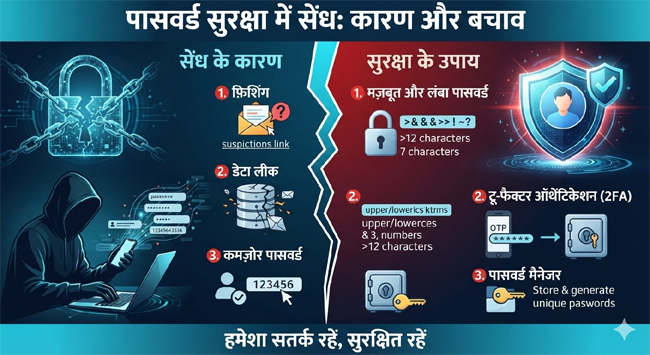
पासवर्ड में सेंध (Breach) के मुख्य कारण
• कमजोर पासवर्ड: '123456', जन्मतिथि या अपना नाम पासवर्ड रखना।
• एक ही पासवर्ड का बार-बार उपयोग: सभी अकाउंट्स (ईमेल, बैंकिंग, सोशल मीडिया) के लिए एक जैसा पासवर्ड रखना।
• फिशिंग अटैक: अनजान लिंक या संदिग्ध ईमेल पर क्लिक करके अपनी जानकारी साझा करना।
• पब्लिक वाई-फाई: बिना सुरक्षा के सार्वजनिक नेटवर्क पर संवेदनशील अकाउंट्स लॉग-इन करना।
सतर्कता और बचाव के उपाय:
• मजबूत और अलग पासवर्ड बनाएं: हर अकाउंट के लिए अक्षरों (A-Z, a-z), अंकों (0-9) और विशेष चिह्नों (@, #, $) का मिश्रण इस्तेमाल करें।
• टू-फैक्टर ऑथेंटिकेशन (2FA) ऑन करें: यह आपके अकाउंट को सुरक्षा की एक अतिरिक्त परत (OTP या ऑथेंटिकेटर ऐप) देता है।
• पासवर्ड मैनेजर का उपयोग करें: ढेर सारे कठिन पासवर्ड याद रखने के लिए भरोसेमंद पासवर्ड मैनेजर की मदद लें।
• संदिग्ध लिंक से बचें: किसी भी अनजान ईमेल या मैसेज में आए लिंक पर क्लिक करने से पहले उसकी सत्यता जांच लें।
1Password data breach: How hackers accessed its systems, what data was exposed and are passwords safe?
1Password disclosed a security breach in which hackers accessed backend systems, exposing customer names, email addresses and account metadata. The company said stored passwords, Secret Keys and encrypted vaults remain safe, with no evidence of account takeovers.
Password management platform 1Password has disclosed a security incident in which an attacker gained access to some of its backend systems and downloaded customer account information.
The company said the breach affected a subset of users, exposing details such as names, email addresses and certain non-sensitive account metadata.
However, 1Password stressed that customer vaults, stored passwords, secret keys and other encrypted information were not accessed or compromised.
In a security update published on November 25, the company said it began investigating suspicious activity on November 19 after detecting signs that an attacker had gained access to an employee's corporate GitHub account.
The attacker allegedly used the compromised account to access 1Password's source code repositories and introduce malicious code into backend services.
These services subsequently downloaded administrative information associated with some customer accounts.
What information was exposed in the 1Password breach?
According to the company, the attacker copied account records belonging to a subset of users.
The information included customer names, email addresses, account and user identifiers, account creation dates and last sign-in times.
The exposed information also included public keys, Secure Remote Password (SRP) protocol parameters, and certain tokens contained in emailed links used for invitations, account provisioning and account recovery.
1Password clarified that the public keys are public by design and that the exposed SRP parameters cannot be used to access customer accounts.
The attacker also copied source code from private repositories and gained access to the company's continuous integration and continuous delivery (CI/CD) system, which contains infrastructure-related credentials.
The company said it had rotated credentials that may have been exposed and found no evidence of customer account takeovers or misuse of exposed provisioning tokens.
Were passwords and stored vaults compromised?
1Password said its customers' vault contents, stored items and the encryption keys protecting them remained secure throughout the incident.
The company explained that it does not have access to customers' account passwords or Secret Keys, which are used to protect their encrypted vaults. Consequently, gaining access to its backend systems does not automatically give an attacker access to the information stored inside customer vaults.
The company also said its account recovery keys, applications and browser extensions were not affected.
What has 1Password done after the security incident?
Following the discovery, 1Password said that it disabled the affected GitHub account, revoked the compromised access token and removed access created by the attacker.
The platform said that it also rotated or revoked potentially exposed internal credentials, strengthened security controls across its GitHub and CI/CD systems, and introduced additional threat detection measures.
As a precaution, the company increased the length of codes used in invitation and account recovery emails from six numeric digits to 10 alphanumeric characters, making them significantly harder to guess.
1Password also brought in independent cybersecurity experts to review its containment and remediation measures.
What should 1Password users do?
The company said customers do not need to make changes to their accounts or update their passwords following the incident.
However, it advised users to remain alert to phishing attempts, particularly unexpected emails, messages or calls involving account invitations and recovery requests.
1Password cautioned customers against sharing their account passwords or Secret Keys, adding that it would never ask users to disclose these credentials.
The company said its applications and services continue to operate normally and pledged to update its security disclosure if further findings emerge.
Bhanu Pratap